BIO:
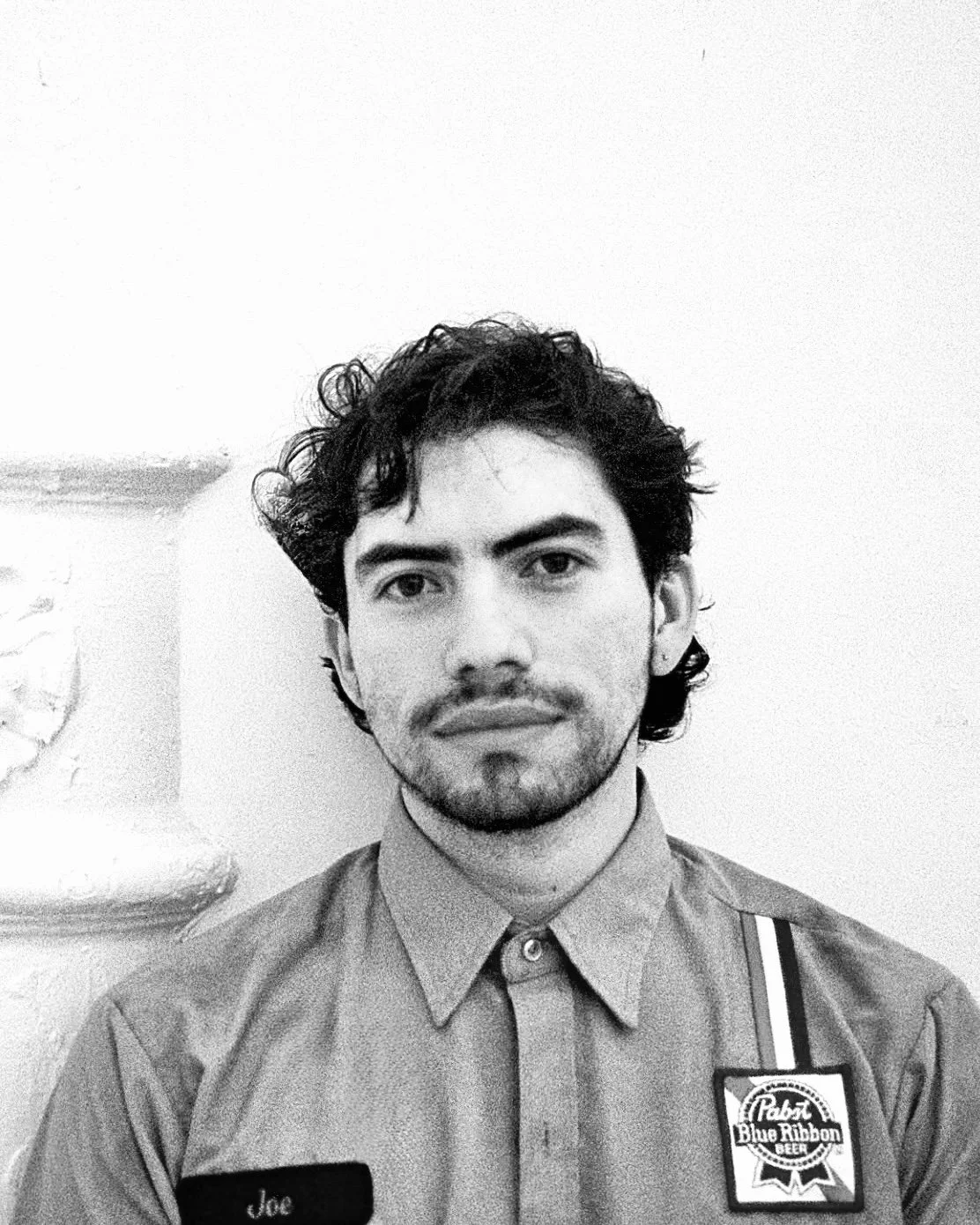
J. La Ve’ (he/ they, Billings, Montana b. 2001) is a multidisciplinary artist working primarily with welded armatures, unorthodox fabric, and canvas stretching techniques. Graduating from Parsons with a BFA in Fine Arts (2027) and a BA from Eugene Lang in Urban Studies (2027), he is currently based in New York City, NY
STATEMENT:
The American road is the implied stage for my work with its ability to fragment and control movement. In parallel, the motor vehicle is a tool used to oppress and escape. The interior of a car can be a space for heightened displays of affect. The exterior is designed to withstand impact, to be individualized, to show off. A motor vehicle then becomes a metal cage that extends the body like an armature in which I correspond to the fundamental sculptural practice of mine.
The palette I work with involves meticulous dirtying, haphazard stitching, and pathetic welds, and yet my force demarcates the work providing forensic evidence of care and manufactured destruction to understand an object’s physicality. This obsession for making, that in its sculptural state, becomes the paradoxical “stand still” between the vehicle and its pedestrian– the work and the viewer. The performance on the road or in the car is a stringent vitality of suburbanized America, in which I attribute my research. The potential collapse of the urban setting is characterized in my work by mimicking blatantly recognizable objects like a cone or helmet, or illustrating a static space for breath. Each work is left with forensic evidence of touch, whether that be through caressing muslin with charcoal, firing sheet metal with an acetyline torch, or forcing two latex figures into a sexual makeshift tourniquet.
The works are a love letter to queer gestures within a masculine mechanized America reliant on the vehicle. As the motorways of the United States have become the reliant veins of the country and the forefront of regional connectivity, the mass fetish of automobiles has influenced not only city design, but our individuality as well. This precarious reinforcement of the urban setting is informed by my own queerness.
Email: jlaveart@gmail.com